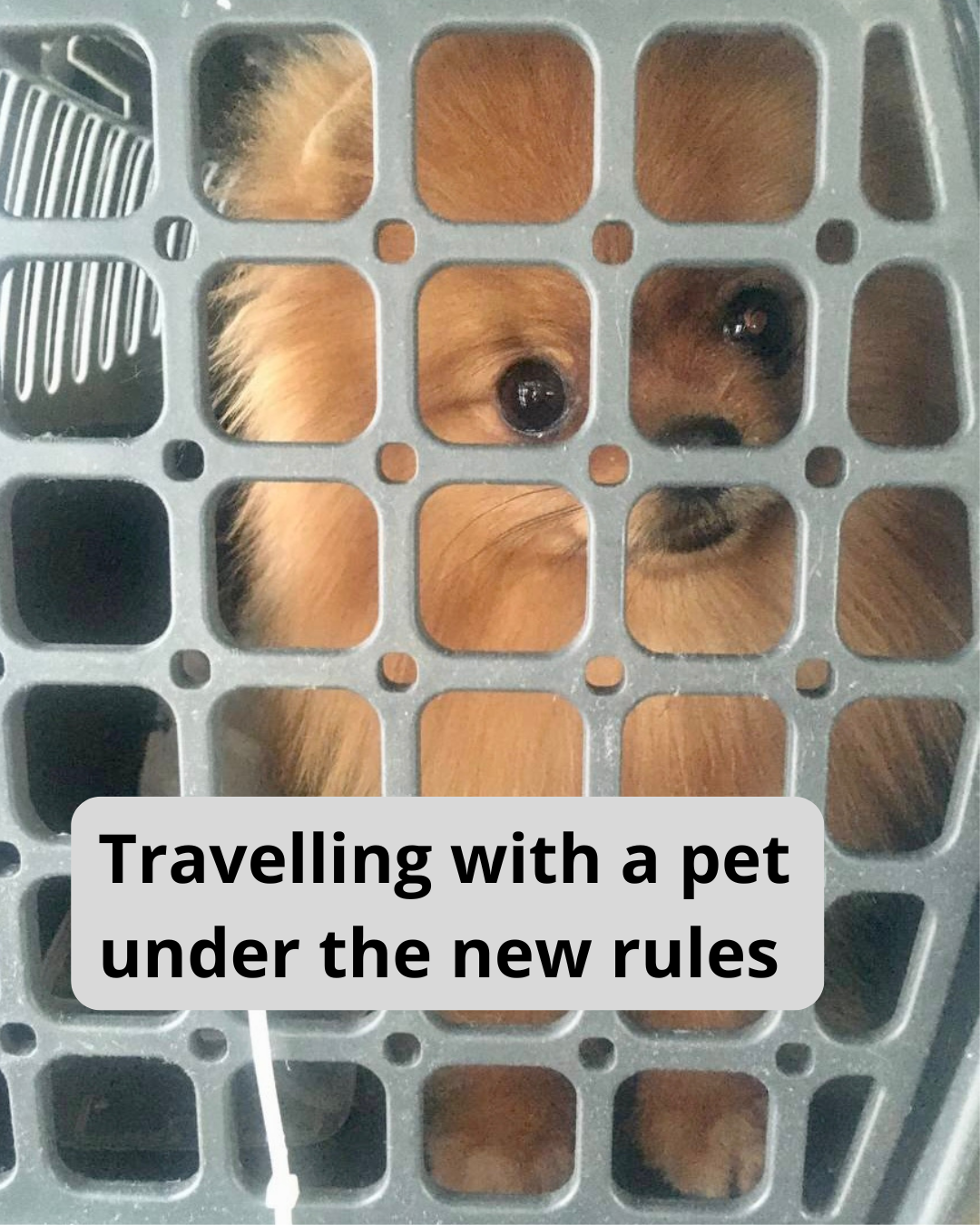
On 22 April 2026, amendments to the current European Union legislation on the non-commercial movement of pet animals entered into force — Commission Delegated Regulation (EU) 2026/131, adopted within the framework of the Animal Health Law.
As stated directly in the Regulation itself, the purpose of these changes is to simplify the regulatory framework, make it more flexible, facilitate its practical application, and eliminate duplication of rules. The requirements for the non-commercial movement of pet animals — both within the EU and when entering the EU from third countries — are now collected in one act, without scattered provisions and cross-references.
As stated directly in the Regulation itself, the purpose of these changes is to simplify the regulatory framework, make it more flexible, facilitate its practical application, and eliminate duplication of rules. The requirements for the non-commercial movement of pet animals — both within the EU and when entering the EU from third countries — are now collected in one act, without scattered provisions and cross-references.
In simple terms, there is now a single document that clearly and consistently regulates the rules for the non-commercial movement of animals across all EU Member States.
Let us look at the key changes which, in our view, have the greatest practical significance.
These concern:
Let us look at the key changes which, in our view, have the greatest practical significance.
These concern:
- the change in the number of animals covered by non-commercial movement;
- new rules for issuing passports and updated requirements for passport models;
- extension of the validity period of veterinary certificates;
- the introduction of clearer requirements for declarations for owners and accompanying persons.
1. Number of animals
The general rule of “up to five animals” already existed before. However, in practice it was often understood as “up to five animals per owner”. This could be used by unscrupulous transporters: under the guise of non-commercial movement, a larger number of dogs or cats could be transported in one vehicle, effectively disguising a commercial transport.
Now the wording has become much clearer. The maximum number of dogs, cats or ferrets that may fall under non-commercial movement is five animals in one means of transport.
This applies both to journeys within the European Union and to entry into the EU from third countries.
This limit may be exceeded only in exceptional cases, provided that all of the following conditions are met at the same time:
If there are more than five animals, or if at least one of these conditions is not met, such transport no longer falls under the ordinary rules for non-commercial movement. In this case, dogs, cats or ferrets must comply with the requirements that apply to the movement of such animals within the EU under stricter rules.
The general rule of “up to five animals” already existed before. However, in practice it was often understood as “up to five animals per owner”. This could be used by unscrupulous transporters: under the guise of non-commercial movement, a larger number of dogs or cats could be transported in one vehicle, effectively disguising a commercial transport.
Now the wording has become much clearer. The maximum number of dogs, cats or ferrets that may fall under non-commercial movement is five animals in one means of transport.
This applies both to journeys within the European Union and to entry into the EU from third countries.
This limit may be exceeded only in exceptional cases, provided that all of the following conditions are met at the same time:
- the animals are being moved to participate in competitions, exhibitions, sporting events, or training for such events;
- written evidence is provided that the animals are registered to participate in the event or with an organisation that organises such events;
- all animals are over six months old.
If there are more than five animals, or if at least one of these conditions is not met, such transport no longer falls under the ordinary rules for non-commercial movement. In this case, dogs, cats or ferrets must comply with the requirements that apply to the movement of such animals within the EU under stricter rules.
2. New passport models
From 22 April 2026, updated standardised pet passports begin to apply in the EU.
A separate document model has been approved for animals for which a passport is issued in EU Member States, and a separate model has been approved for certain third countries or territories included in a special list.
A transitional period until 1 January 2028 has been set for this change.
This means that until 31 December 2027 inclusive, old passport forms may still be used when issuing passports.
Therefore, after 22 April 2026, there may be a situation where one clinic or country is already issuing the new passport, while another may continue to use the old form for some time.
A passport in the previous format issued before 1 January 2028 remains valid after that date. It does not need to be replaced only because a new form has appeared.
From 22 April 2026, updated standardised pet passports begin to apply in the EU.
A separate document model has been approved for animals for which a passport is issued in EU Member States, and a separate model has been approved for certain third countries or territories included in a special list.
A transitional period until 1 January 2028 has been set for this change.
This means that until 31 December 2027 inclusive, old passport forms may still be used when issuing passports.
Therefore, after 22 April 2026, there may be a situation where one clinic or country is already issuing the new passport, while another may continue to use the old form for some time.
A passport in the previous format issued before 1 January 2028 remains valid after that date. It does not need to be replaced only because a new form has appeared.
3. Rules for issuing veterinary passports in the EU
From 22 April 2026, the rules for issuing EU passports for dogs, cats and ferrets have also changed.
The Regulation now directly explains that an EU pet passport is intended for animals kept in the EU Member State where the owner habitually resides and has their main place of residence. In other words, the European passport should primarily be issued to owners who actually live in the EU, rather than those who are staying there temporarily or seasonally.
Previously, owners from third countries could obtain an EU pet passport during their stay in the EU and then use it for repeated entries into the European Union from a third country without a certificate.
Now, if the owner habitually lives, for example, in Belarus, Great Britain or another third country, and the dog has a European passport, this no longer means that the passport automatically replaces the certificate when entering the EU.
Such owners need to obtain a veterinary certificate, unless a special exception applies.
This has already been confirmed separately for Great Britain on the official website: owners residing in Great Britain can no longer use an EU pet passport as a sufficient document for entry with a dog, cat or ferret into the EU. Even if such a passport was issued earlier, an Animal Health Certificate is required for travel from Great Britain to the European Union.
From 22 April 2026, the rules for issuing EU passports for dogs, cats and ferrets have also changed.
The Regulation now directly explains that an EU pet passport is intended for animals kept in the EU Member State where the owner habitually resides and has their main place of residence. In other words, the European passport should primarily be issued to owners who actually live in the EU, rather than those who are staying there temporarily or seasonally.
Previously, owners from third countries could obtain an EU pet passport during their stay in the EU and then use it for repeated entries into the European Union from a third country without a certificate.
Now, if the owner habitually lives, for example, in Belarus, Great Britain or another third country, and the dog has a European passport, this no longer means that the passport automatically replaces the certificate when entering the EU.
Such owners need to obtain a veterinary certificate, unless a special exception applies.
This has already been confirmed separately for Great Britain on the official website: owners residing in Great Britain can no longer use an EU pet passport as a sufficient document for entry with a dog, cat or ferret into the EU. Even if such a passport was issued earlier, an Animal Health Certificate is required for travel from Great Britain to the European Union.
4. Validity period of the certificate from third countries
The validity period of the veterinary certificate for entry into the EU remains the same: it is valid for 10 days from the date of issue until the animal is checked at the point of entry into the European Union.
If the animal is transported by sea, this period may be extended by the duration of the sea journey.
The main change concerns further movements within the EU after entry. Previously, the certificate was valid for such movements for up to 4 months. Now this period has been extended to 6 months from the date of the documentary and identity check at the point of entry — or until the expiry of the rabies vaccination, if the vaccination expires earlier.
In addition to the certificate itself, the animal must be accompanied by a written declaration from the owner or the authorised person. This declaration confirms that the movement of the animal is non-commercial, meaning that it is not related to sale, transfer of ownership or change of owner.
In other words, the certificate confirms compliance with veterinary requirements, while the declaration confirms the non-commercial nature of the journey.
The validity period of the veterinary certificate for entry into the EU remains the same: it is valid for 10 days from the date of issue until the animal is checked at the point of entry into the European Union.
If the animal is transported by sea, this period may be extended by the duration of the sea journey.
The main change concerns further movements within the EU after entry. Previously, the certificate was valid for such movements for up to 4 months. Now this period has been extended to 6 months from the date of the documentary and identity check at the point of entry — or until the expiry of the rabies vaccination, if the vaccination expires earlier.
In addition to the certificate itself, the animal must be accompanied by a written declaration from the owner or the authorised person. This declaration confirms that the movement of the animal is non-commercial, meaning that it is not related to sale, transfer of ownership or change of owner.
In other words, the certificate confirms compliance with veterinary requirements, while the declaration confirms the non-commercial nature of the journey.
5. Written declarations within the EU
An important change concerns written declarations for those travelling with pets.
Now, even when moving within the EU with one’s own dog, cat or ferret, it is necessary to have not only a passport but also a written declaration confirming the non-commercial nature of the journey. This declaration must be drawn up according to the established model — Annex V, Part 2 to Commission Implementing Regulation (EU) 2026/705.
It confirms that the animal is not being moved for sale, transfer to another person or change of owner.
If the owner cannot travel at the same time as the animal, the animal may be transported by an authorised person. In this case, the owner must travel within five days before or after the movement of the animal. This must be confirmed by a written declaration attached to the passport. The model of such a declaration is set out in Annex V, Part 1 to Commission Implementing Regulation (EU) 2026/705.
In cases where the non-commercial movement of a pet animal is not linked to the movement of the owner, or where the conditions for transport by an authorised person are not met, the animals must comply with the animal health requirements applicable to the movement or entry of such animals into the EU.
We hope that these changes will help make the rules for the movement of animals clearer, more transparent and more uniform across all EU Member States. Most importantly, we hope that in practice they will contribute to better animal protection, reduce abuses and encourage a more responsible approach to animal transport.
You can read the full text of the amendments by following the link.
You can view the models of the new passports, certificates and declarations by following the link.
An important change concerns written declarations for those travelling with pets.
Now, even when moving within the EU with one’s own dog, cat or ferret, it is necessary to have not only a passport but also a written declaration confirming the non-commercial nature of the journey. This declaration must be drawn up according to the established model — Annex V, Part 2 to Commission Implementing Regulation (EU) 2026/705.
It confirms that the animal is not being moved for sale, transfer to another person or change of owner.
If the owner cannot travel at the same time as the animal, the animal may be transported by an authorised person. In this case, the owner must travel within five days before or after the movement of the animal. This must be confirmed by a written declaration attached to the passport. The model of such a declaration is set out in Annex V, Part 1 to Commission Implementing Regulation (EU) 2026/705.
In cases where the non-commercial movement of a pet animal is not linked to the movement of the owner, or where the conditions for transport by an authorised person are not met, the animals must comply with the animal health requirements applicable to the movement or entry of such animals into the EU.
We hope that these changes will help make the rules for the movement of animals clearer, more transparent and more uniform across all EU Member States. Most importantly, we hope that in practice they will contribute to better animal protection, reduce abuses and encourage a more responsible approach to animal transport.
You can read the full text of the amendments by following the link.
You can view the models of the new passports, certificates and declarations by following the link.