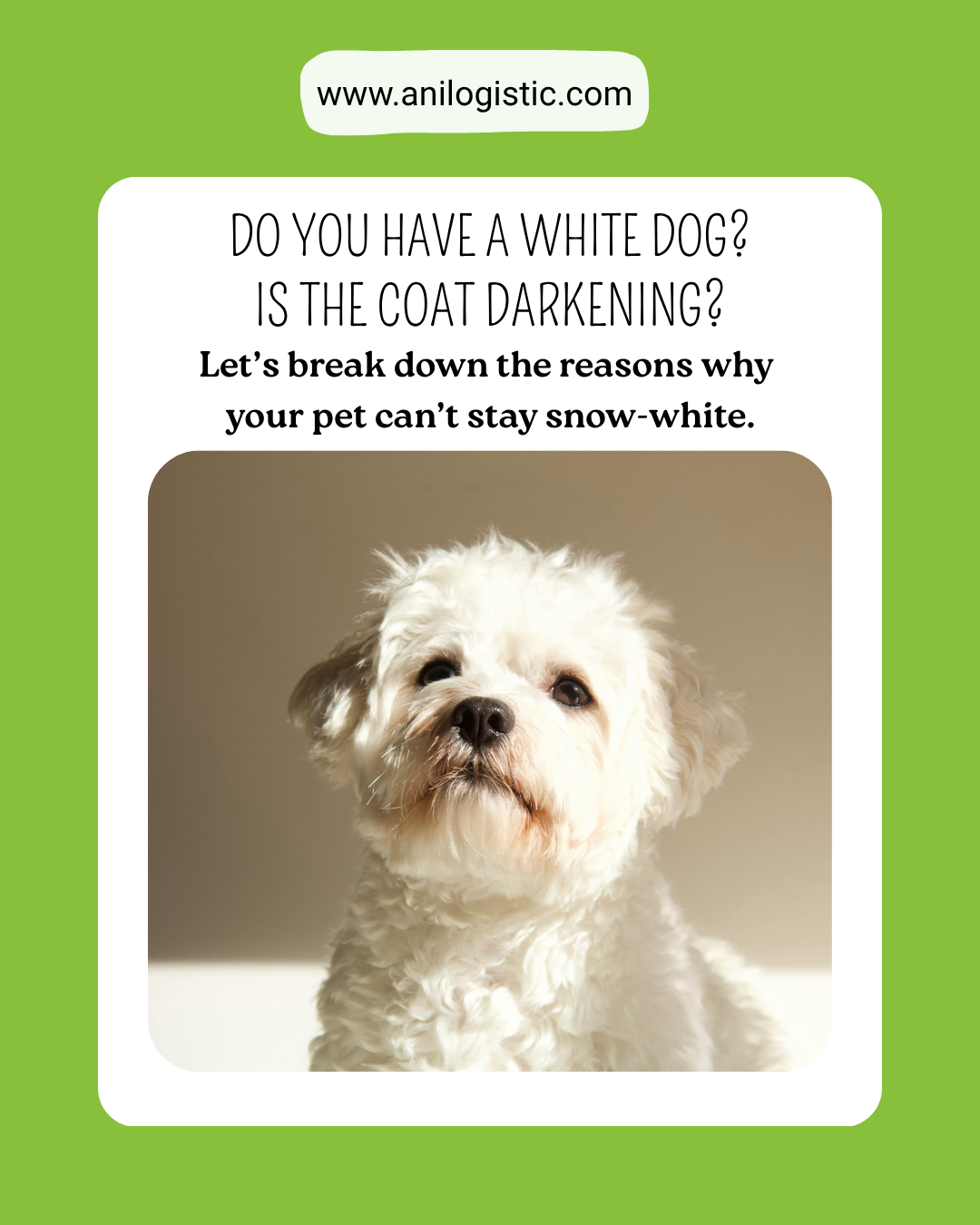
You're choosing quality food and taking good care of your pet, yet the fur is still darkening, and unsightly tear stains keep appearing under their eyes?
White fur doesn't forgive mistakes: even minor issues in the diet immediately affect your pet's appearance.
We recently discussed how to select quality dog food and which ingredients to look for. However, owners of white dogs should pay attention to certain specifics that could affect their pet's appearance, even if the diet seems perfect.
White fur doesn't forgive mistakes: even minor issues in the diet immediately affect your pet's appearance.
We recently discussed how to select quality dog food and which ingredients to look for. However, owners of white dogs should pay attention to certain specifics that could affect their pet's appearance, even if the diet seems perfect.

1 Colorants, including natural ones
Carrots, pumpkin, beetroot, turmeric—these are healthy ingredients often found in dog food. But for white dogs, it's important they appear in smaller quantities. In excess, pigments from these ingredients accumulate in the fur, causing yellow or reddish stains, especially noticeable in dogs prone to tear staining.
2 Artificial additives and flavor enhancers
These can irritate mucous membranes, provoke allergic reactions, increase tearing, and lead to brown stains around the eyes and muzzle.
3 Vague meat ingredients
Terms like "meat meal" or "animal by-products" sound normal but can include liver, blood, and other components that contribute to reddish fur discoloration.
4 Excess iron, copper, and manganese
These minerals are essential, but too much can cause unwanted yellowish-red fur shades. Ideally, iron content shouldn't exceed 150–200 mg/kg.
5 Cheap grains (corn, wheat, soy)
These ingredients often cause itching and allergies, leading to fur darkening and damage. Any skin irritations are immediately visible on white fur.
Carrots, pumpkin, beetroot, turmeric—these are healthy ingredients often found in dog food. But for white dogs, it's important they appear in smaller quantities. In excess, pigments from these ingredients accumulate in the fur, causing yellow or reddish stains, especially noticeable in dogs prone to tear staining.
2 Artificial additives and flavor enhancers
These can irritate mucous membranes, provoke allergic reactions, increase tearing, and lead to brown stains around the eyes and muzzle.
3 Vague meat ingredients
Terms like "meat meal" or "animal by-products" sound normal but can include liver, blood, and other components that contribute to reddish fur discoloration.
4 Excess iron, copper, and manganese
These minerals are essential, but too much can cause unwanted yellowish-red fur shades. Ideally, iron content shouldn't exceed 150–200 mg/kg.
5 Cheap grains (corn, wheat, soy)
These ingredients often cause itching and allergies, leading to fur darkening and damage. Any skin irritations are immediately visible on white fur.
Additional useful tips:
Main takeaway:
Don't rely solely on packaging labeled "for white dogs." This doesn't always guarantee the ideal formulation. Spend a few minutes carefully reviewing the ingredients to avoid issues and keep your pet’s fur perfectly white.
- Use ceramic or stainless steel bowls—plastic bowls can stain the fur under the chin.
- Provide filtered water to help reduce tear staining.
Main takeaway:
Don't rely solely on packaging labeled "for white dogs." This doesn't always guarantee the ideal formulation. Spend a few minutes carefully reviewing the ingredients to avoid issues and keep your pet’s fur perfectly white.
Check out our Eco-Market, where you'll find plenty of great brands to help maintain your pet's health and beauty!