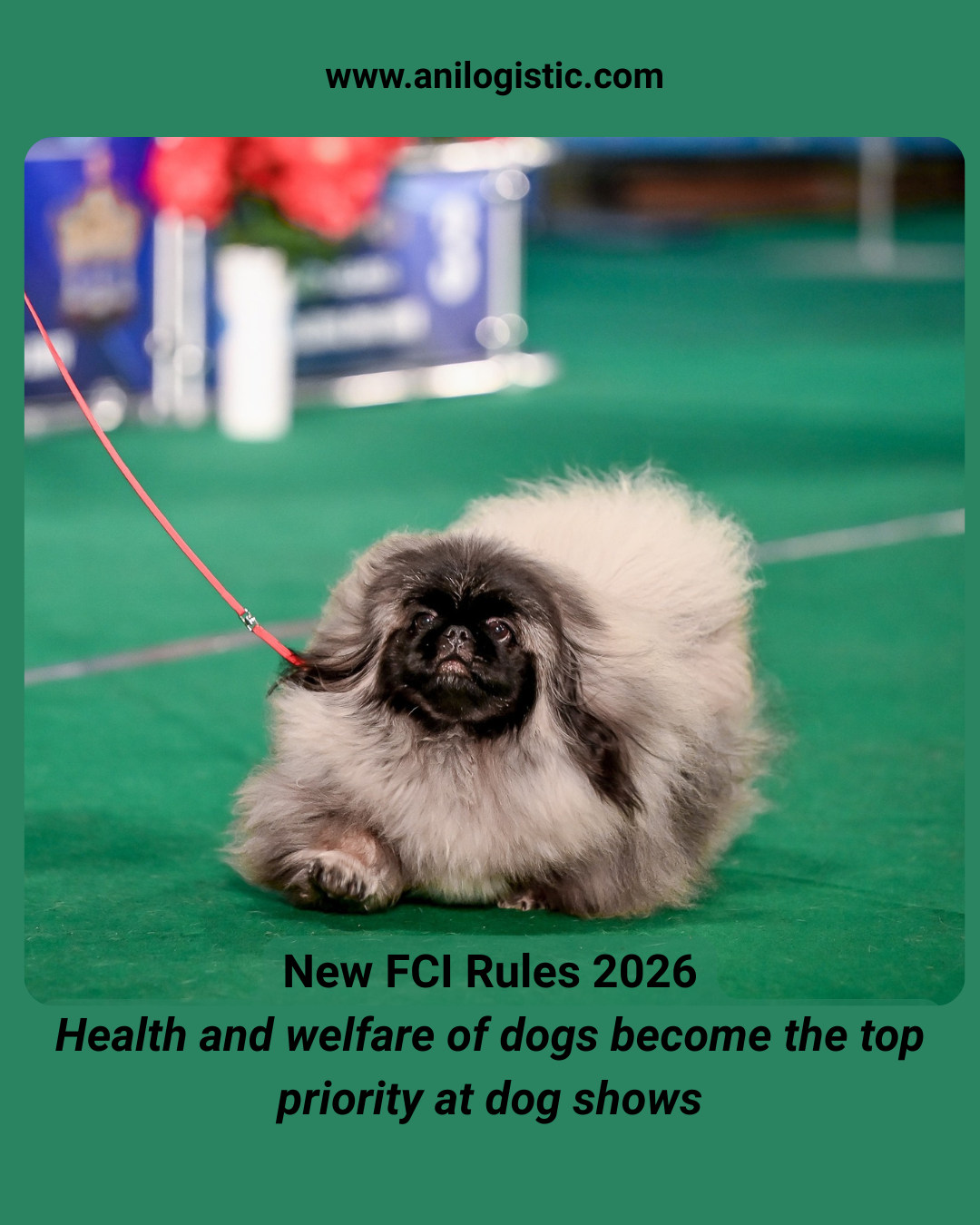
Starting from January 1, 2026, the updated rules of the Fédération Cynologique Internationale (FCI) — the world’s largest canine federation uniting more than 100 national kennel clubs — will take effect.
The document, approved by the FCI General Committee in May 2025 in Budapest, establishes a new exhibition standard:
The document, approved by the FCI General Committee in May 2025 in Budapest, establishes a new exhibition standard:
The welfare and health of dogs must be of utmost priority.”
From now on, organizers, judges, and exhibitors share collective responsibility for the physical and mental wellbeing of all participating dogs. The rules explicitly state:
“The dogs’ welfare and health must be of UTMOST PRIORITY at all dog shows.”
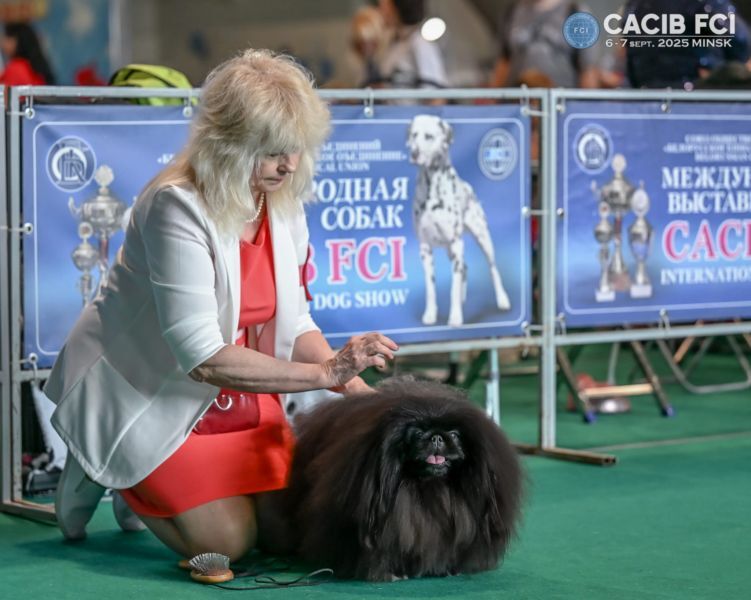
This is no longer a recommendation — it is a binding requirement. Any violation can result in the removal of a dog from the ring or disciplinary measures against the organizers.
Catalogues must now include a mandatory notice:
Catalogues must now include a mandatory notice:
“It is forbidden to expose a dog to a situation that can be dangerous for its health and welfare… Violation of this ruling will result in exclusion from the ongoing and future dog shows.”
In other words, leaving a dog in a car during heat or cold may lead to disqualification not only from the current show but also from future events.
One of the most discussed changes is the strict ban on using any substances that alter the dog’s natural appearance.
One of the most discussed changes is the strict ban on using any substances that alter the dog’s natural appearance.
“It is forbidden to prepare a dog with any substance that will alter the structure, colour or form of the coat, skin or nose. Only trimming, clipping, combing and brushing are allowed.”
This means that dyes, coat sprays, straighteners, or nose tinting products are strictly prohibited. If a judge detects any interference — the dog must be withdrawn immediately.
For the first time, FCI formally introduces the principle of shared responsibility: the welfare of the dog is the duty of owners, judges, handlers, and organizers alike. Organizers are now required to ensure proper conditions for dogs during shows. A separate provision has been added for puppies and young dogs, emphasizing the need for a calm, safe, and stress-free environment:
For the first time, FCI formally introduces the principle of shared responsibility: the welfare of the dog is the duty of owners, judges, handlers, and organizers alike. Organizers are now required to ensure proper conditions for dogs during shows. A separate provision has been added for puppies and young dogs, emphasizing the need for a calm, safe, and stress-free environment:
“…to provide a professional environment paying special attention to their health and wellbeing-related needs.”
The rules also clarify age classes and entry eligibility. The decisive date for age is now the day of the show:
“The decisive date for age is the day the dog is shown. In case the dog’s birthday is on the day it is shown, the exhibitor can choose the class (before closing date).”
Title allocations have also been updated:
“No Reserve FCI-CACIB-J and FCI-CACIB-V can be awarded.”
This means junior and veteran international titles are awarded only to dogs graded EXCELLENT 1st, with no reserve placements.
The criteria for disqualification and removal from the ring have been expanded. A dog may now be disqualified if its condition endangers its own welfare or if traces of intervention are found — for example, cosmetic or surgical alterations aimed at modifying its appearance.
The criteria for disqualification and removal from the ring have been expanded. A dog may now be disqualified if its condition endangers its own welfare or if traces of intervention are found — for example, cosmetic or surgical alterations aimed at modifying its appearance.
“DISQUALIFIED … dogs that correspond so little to a single feature of the breed that their health is threatened.”
“CANNOT BE JUDGED … if traces of operations or treatment can be observed which seem to indicate that the exhibitor wanted to deceive the judge.”
In addition, FCI can now impose disciplinary sanctions and suspend organizers from hosting international events for violations of welfare regulations — a significant tightening compared to the previous administrative-only penalties.
Many countries have already introduced similar requirements at the national level. The strictest control currently exists in Germany. The federal Tierschutz-Hundeverordnung prohibits the participation of dogs exhibiting Qualzuchtmerkmale — hereditary traits that impair normal functions such as breathing, movement, or skin health. Even dogs with pedigrees and titles may be refused entry. For certain breeds, a veterinary check before the ring is mandatory.
Under special supervision are brachycephalic and anatomically vulnerable breeds: pugs, French and English bulldogs, Pekingese, Shih Tzu, Cavalier King Charles Spaniels, Dogues de Bordeaux, Shar-Peis, Boston Terriers, some boxer lines, dachshunds, basset hounds, corgis, English bull terriers, and German shepherds with excessively sloped backs.
Under special supervision are brachycephalic and anatomically vulnerable breeds: pugs, French and English bulldogs, Pekingese, Shih Tzu, Cavalier King Charles Spaniels, Dogues de Bordeaux, Shar-Peis, Boston Terriers, some boxer lines, dachshunds, basset hounds, corgis, English bull terriers, and German shepherds with excessively sloped backs.
The main focus of the new rules shifts from decorative appearance to functionality, endurance, and anatomical correctness. Dogs should display natural, healthy movement and balanced structure — not exaggerated forms or restricted breathing.
For decades, extreme breed types were seen as perfection, yet veterinary evidence has shown that such selective exaggeration often causes chronic health issues. Germany was the first to legislate this principle, and now the FCI is setting it as the international norm.
For decades, extreme breed types were seen as perfection, yet veterinary evidence has shown that such selective exaggeration often causes chronic health issues. Germany was the first to legislate this principle, and now the FCI is setting it as the international norm.
This reform changes the philosophy of dog shows. Health and wellbeing take precedence over titles and aesthetics. For breeders, this is a signal to redefine breeding goals; for exhibitors — a call to prepare veterinary documentation carefully; and for organizers — a duty to ensure safety and comfort for every dog.
This is more than an update — it’s a shift toward a new ethical standard, where respect for the animal becomes the true measure of professionalism in cynology.
This is more than an update — it’s a shift toward a new ethical standard, where respect for the animal becomes the true measure of professionalism in cynology.
You may also like
Crufts 2026: New Rules for Bulldogs, French Bulldogs and Pugs.
Ruling of the Court of Justice of the European Union on the case of the escaped dog on the Iberia
Breeding of Brachycephalic Dogs: Will EU Countries Follow the Path of the Netherlands and Denmark?
How the EU Tracks Illegal Animal Import and Trade
New animal welfare rules in the EU: decision adopted, implementation ahead!
Crufts 2026: New Rules for Bulldogs, French Bulldogs and Pugs.
Ruling of the Court of Justice of the European Union on the case of the escaped dog on the Iberia
Breeding of Brachycephalic Dogs: Will EU Countries Follow the Path of the Netherlands and Denmark?
How the EU Tracks Illegal Animal Import and Trade
New animal welfare rules in the EU: decision adopted, implementation ahead!