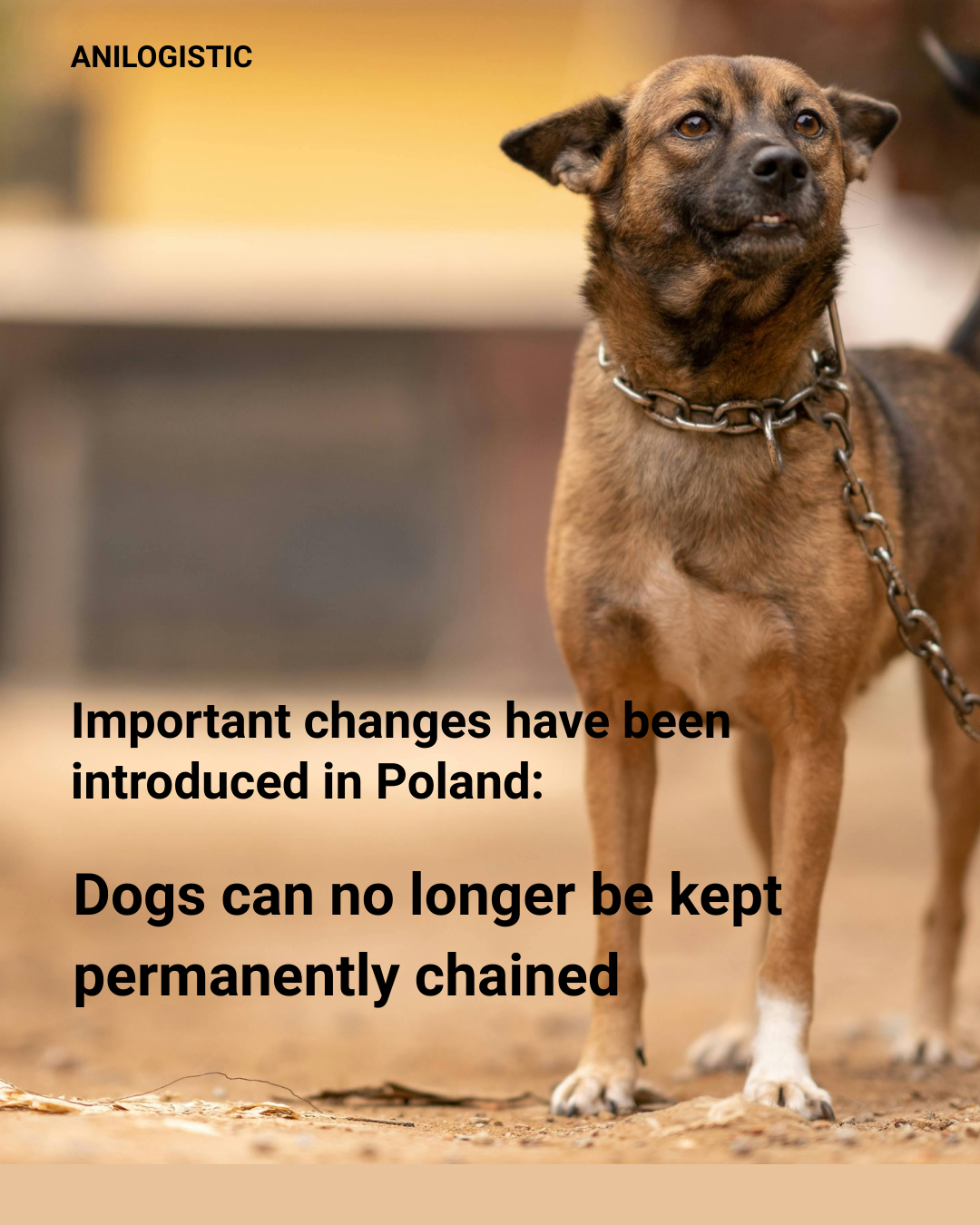
Poland has officially taken a historic step toward improving animal welfare. President Karol Nawrocki has signed the revised "chain law"—a piece of legislation that animal advocates had been waiting for for years. From now on, keeping a dog permanently chained is prohibited by law, and the same rule also applies to cats.
The new law introduces a general ban on permanently keeping animals tethered. Instead, owners are required to provide their pets with daily exercise and physical activity, suitable shelter from adverse weather conditions—such as a doghouse or similar structure—and living conditions that meet the animal's physiological and behavioral needs. If a dog lives outdoors rather than inside a home, it must be allowed to move freely at all times within a securely fenced area.

The law also specifically regulates the use of kennels. A dog may be kept in a kennel instead of roaming freely only in two situations: if the property is not fenced and free movement cannot realistically be ensured, or if the dog poses a danger to people or other animals. The kennel itself must meet certain standards, including providing enough space for the animal to move freely. The exact minimum size requirements will be established later by the Minister of Agriculture in consultation with Poland's Chief Veterinary Officer.
The general ban includes several exceptions. Temporary, one-time restraint of an animal outside its permanent place of residence is allowed, provided that it does not compromise the animal's welfare. Restraint is also permitted when it is necessary to prevent an immediate threat to people or other animals and no other reasonable solution exists. Certain provisions of the law do not apply to specially trained service dogs, some livestock guardian breeds, animals kept in shelters, and certain breeding operations.
The road to adopting this law was far from straightforward. President Nawrocki vetoed the first version of the bill in November 2025, calling it unfinished and excessively restrictive. According to him, many of its requirements would have been impossible for ordinary animal owners to meet, and the proposed minimum kennel sizes were so large that he compared them to the size of one-bedroom apartments. The revised version strikes a more balanced approach, taking into account the realities faced by farmers, breeders, animal shelters, public services, and owners of herding and working dogs, while removing several controversial provisions. According to Nawrocki, signing the revised law is not only a victory for animal welfare but also proof that his veto ultimately improved the legislation, making it more practical and workable.
Anyone who continues to keep a dog permanently chained after the law enters into force may face a fine of up to 5,000 PLN or up to 30 days of arrest. If such treatment causes the animal pain or suffering, the case may be prosecuted as animal cruelty, which carries significantly harsher penalties, including imprisonment, confiscation of the animal, and mandatory financial contributions to organizations dedicated to animal protection.
Owners have been given 12 months from the official publication of the law to bring their animals' living conditions into compliance with the new requirements. The dog chain, as a normal way of keeping a dog, is expected to become a thing of the past. However, as is often the case, the real impact of the reform will depend not only on the wording of the law but also on how effectively it is enforced.